Securing the Future: A Strategic Guide to Succession Planning
For many business owners, a business is not just an income stream — it is a lifetime of risk, sacrifice, reinvestment, and resilience. 💼🔥
Across Sierra Leone and the wider African market, we regularly meet founders who have built remarkable enterprises from the ground up — navigating:
Regulatory shifts
Currency volatility
Supply chain disruptions
Informal market pressures
Yet when we ask one simple question:
“What happens if you step back?”
The room often goes quiet.
Succession planning is not about retirement alone. It is about control, continuity and value protection. Without a clear plan, decades of work can become vulnerable to:
⚠ Family disputes
⚠ Tax exposure
⚠ Governance breakdown
⚠ Forced sales under pressure
Done properly, succession planning protects value, preserves culture and gives everyone peace of mind.
Why Succession Planning Matters
A structured transition keeps the business aligned with your values, governance standards, and long-term strategy — even after you reduce daily involvement. It also ensures financial certainty, allowing you and your family to benefit fully from the value created over time.
We have seen businesses with strong revenues struggle simply because leadership transitions were unplanned. Illness, unexpected events, or sudden exits can disrupt operations and weaken stakeholder confidence if there is no clear structure in place.
Businesses with continuity are stronger. Investors, banks and buyers place a premium on companies that demonstrate:
✔ Clear leadership depth
✔ Strong governance structures
✔ Documented systems
✔ Defined ownership frameworks
A business that depends entirely on one individual is high risk. A business built for continuity is investable.
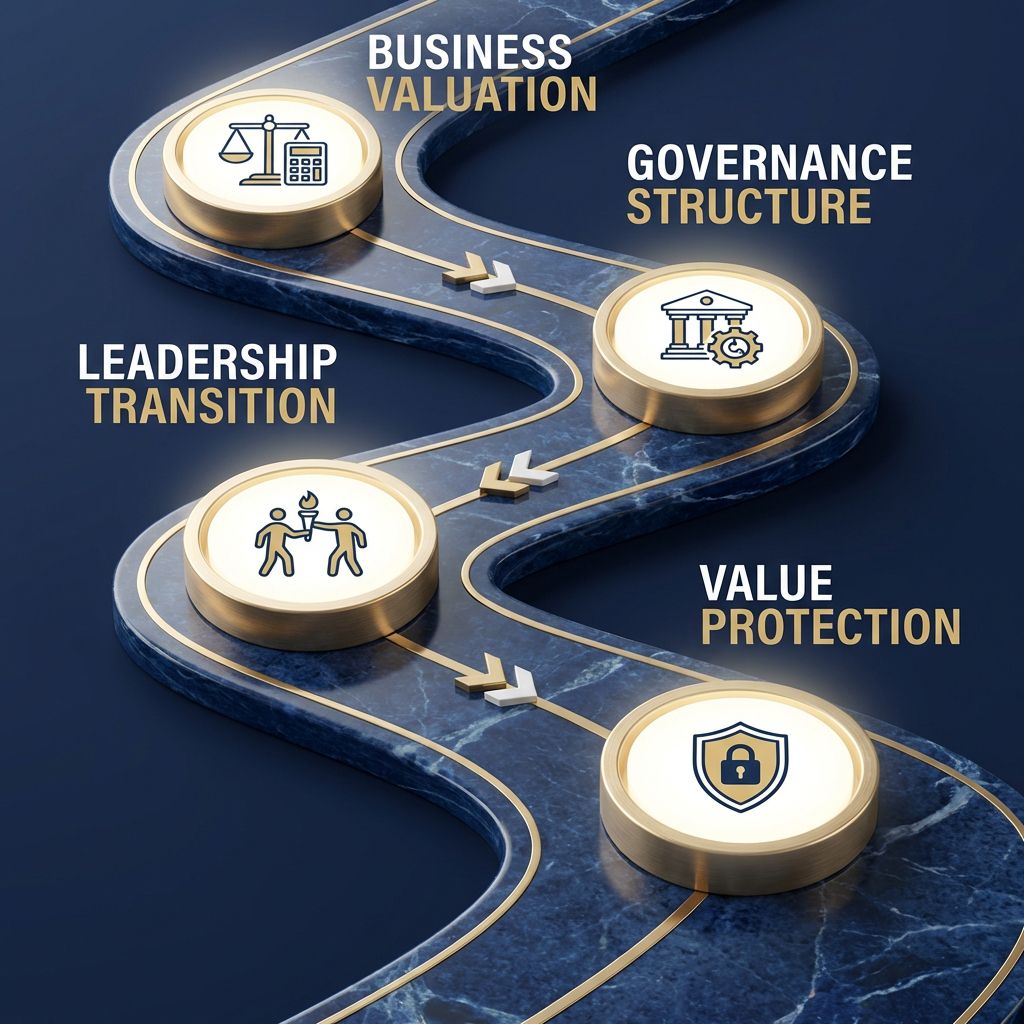
A Straightforward Succession Roadmap
Succession does not need to be complicated — but it must be deliberate.
Clarify Your Goals
Define what success looks like — whether that means a full exit, a gradual transition, family continuity, or a strategic sale. Your personal financial objectives must align with your business strategy to avoid reactive decisions later.
Identify & Prepare Successors
Whether successors are family members, senior management, or external parties, capability must be assessed realistically. Mentorship gaps should be identified early, and responsibility should grow gradually — not suddenly — to build internal and external confidence.
Build the Right Advisory Team
Succession requires coordinated expertise across tax, legal, finance and corporate advisory functions. Valuation, tax structuring, legal protections and shareholder arrangements must align rather than operate in isolation.
Understand Your Business Value
A professional valuation does more than determine price. It often highlights:
Profitability gaps
Operational inefficiencies
Governance weaknesses
Growth opportunities
Value enhancement typically begins years before any formal exit.
Plan the Transition Timeline
Clear handover stages, communication strategy, leadership announcements and stakeholder engagement are critical. Poor timing or unclear messaging can quickly erode confidence.
Review Legal & Tax Structures Early
Legal instruments such as wills, trust deeds, shareholder agreements and buy-sell clauses should be reviewed well before execution. Tax-efficient restructuring is most effective when done proactively.
Keep the Plan Under Review
Markets change.
Family circumstances evolve.
Business priorities shift.
Succession strategy should evolve with them.
Family Transition vs External Sale
👨👩👧👦 Family Succession
Requires open dialogue about roles and expectations
Competence must match responsibility
Gradual exposure builds credibility internally and externally
🤝 External Sale
Clean financials
Documented systems
Strong EBITDA performance
Reduced owner dependency
Buyers invest in structure — not chaos.
The African Context: Why Planning Matters Even More
In many African businesses, ownership, management, and family identity are intertwined. Decision-making authority is often concentrated, and key relationships may sit with one individual. While this model can drive early growth, it makes transitions fragile.
Strategic succession planning formalises what founders have built intuitively — introducing structure, delegation and governance clarity that turn entrepreneurial success into institutional longevity.
The goal is simple:
➡ From Founder-Led to System-Led
➡ From Personality-Driven to Governance-Driven
➡ From Vulnerable to Valuable
Beyond Retirement: A Strategic Imperative
Succession planning is not merely a financial exercise. It is:
A risk management strategy
A value creation strategy
A governance strategy
A family protection strategy
Most importantly, it honours the years of work that built the business.
How Gordon & Associates Supports Business Owners
At Gordon & Associates, we combine:
✔ Business valuation expertise
✔ Tax planning & restructuring
✔ Governance advisory
✔ Risk management
✔ Financial modelling
✔ Transaction readiness preparation
We help founders move from uncertainty to structure — protecting what has been built and preparing what comes next.
Because succession should not be an emergency decision.
It should be a strategic milestone.
The Real Question
The question is not whether you will exit. The question is whether you will exit on your terms.
If you are building, growing or preparing for transition — now is the time to start the conversation.